
Home > News > Selection Guides
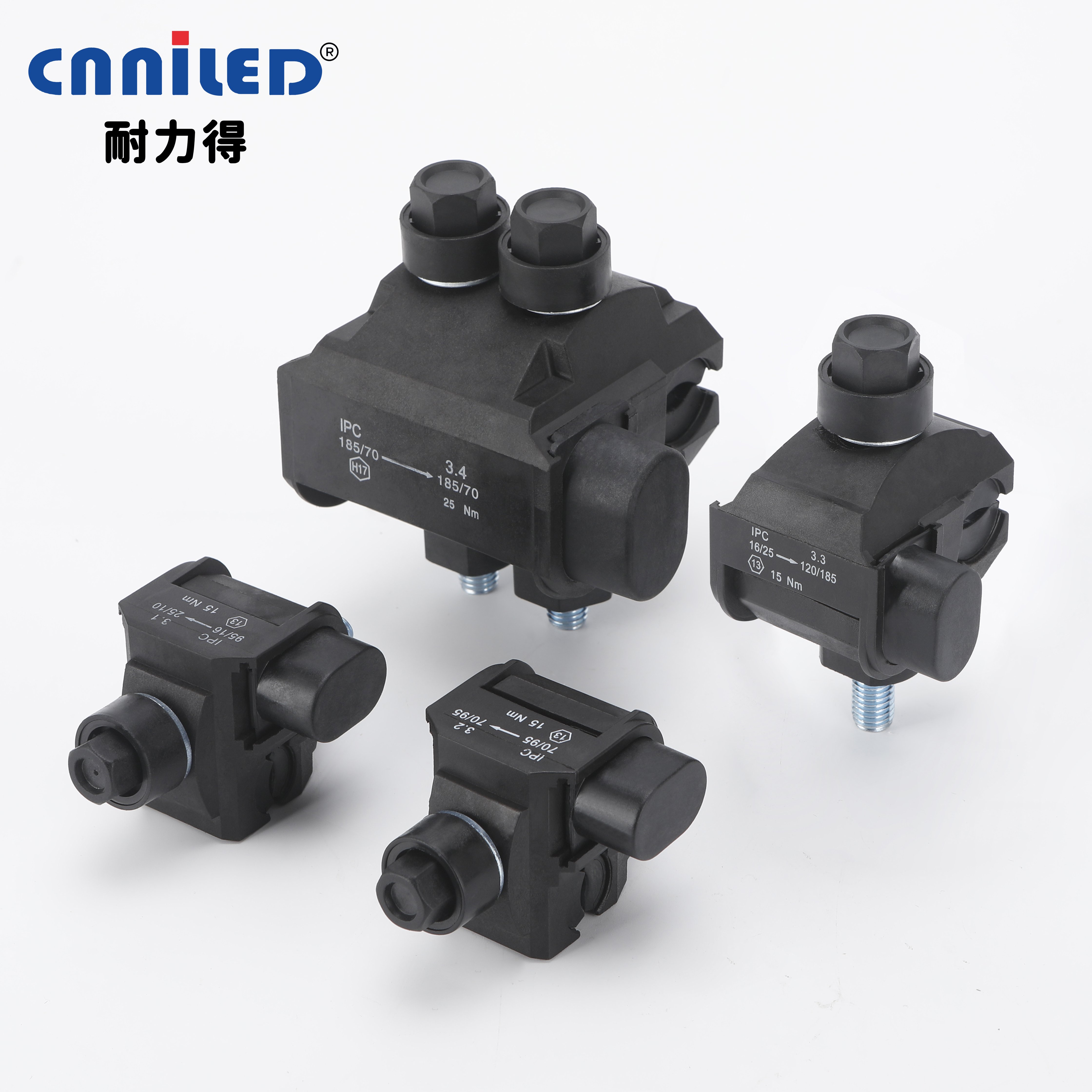
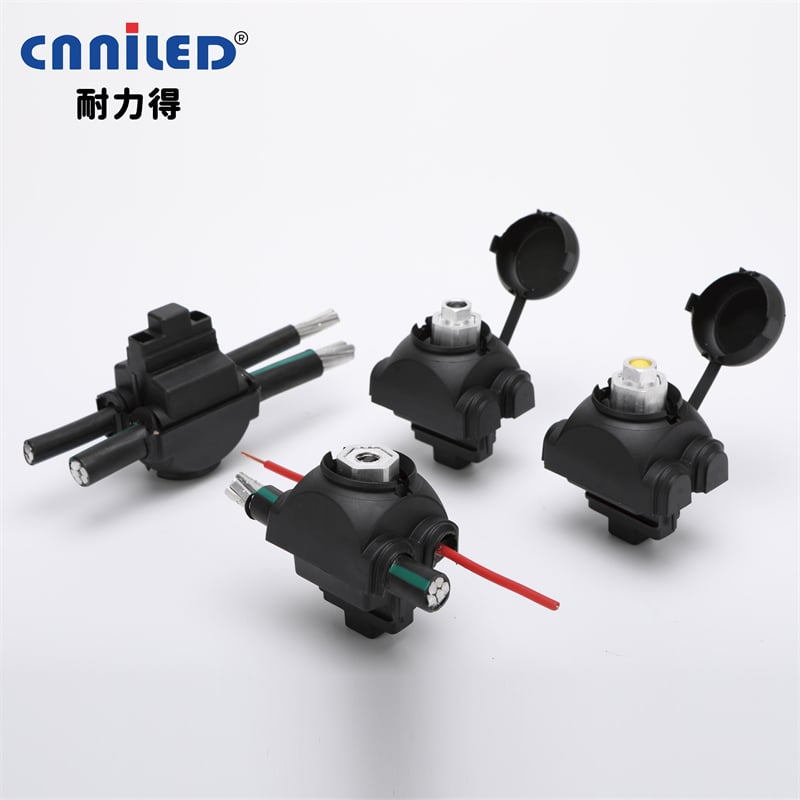
An insulation piercing connector (IPC) is an electrical connector designed to establish contact with insulated conductors without requiring conventional insulation stripping. IPCs are commonly used in overhead electrical distribution systems to connect branch conductors to main insulated lines.
Choosing the right IPC depends on several technical factors, including conductor cross-sectional area, conductor material, electrical ratings, installation torque, and environmental conditions.
For utility engineers, electrical contractors, and distributors, selecting a connector with the correct specifications is essential for achieving the intended electrical and mechanical connection performance.
This guide from CNNILED explains how IPCs work, compares published specifications for different connector models, and outlines the key considerations for selecting suitable electrical fittings.
An insulation piercing connector uses specially designed contact elements to penetrate the insulation of compatible conductors.
During installation, a clamping mechanism applies force to the connector, allowing its piercing contacts to establish electrical contact with the conductor beneath the insulation.
Depending on the model, an IPC may include:
Piercing contacts: Establish contact with the electrical conductor.
Insulated housing: Provides electrical insulation and mechanical protection.
Clamping bolts: Apply the required connection force.
Sealing components: Help protect the connection from environmental exposure.
Tightening mechanism: Supports installation according to the manufacturer's requirements.
The exact construction and installation procedure depend on the connector model.
Insulation piercing connectors are commonly associated with insulated overhead power distribution networks.
Typical applications include:
IPCs can be used to establish suitable electrical connections between insulated overhead conductors.
Compatible IPC models may be used in low-voltage aerial bundled cable (ABC) systems for branch connections.
An IPC can connect a branch conductor to a main conductor without conventional insulation stripping.
In suitable applications, IPCs can support the addition of branch connections to existing insulated distribution networks.
The connector must always be selected according to the electrical system, conductor specifications, and applicable installation requirements.
Conductor compatibility is one of the most important factors in IPC selection.
Each connector model has specified ranges for its main conductor and branch conductor.
These ranges are generally expressed in square millimeters (mm²), referring to conductor cross-sectional area.
For example, a connector designed for a 16–95 mm² main conductor may support a smaller branch conductor range.
Before choosing an IPC, verify:
Main conductor cross-sectional area
Branch conductor cross-sectional area
Conductor material
Insulation type and construction
Required electrical ratings
Installation requirements
Selecting a connector outside its specified conductor range may compromise the intended connection performance.
CNNILED offers different insulation piercing connector models with published conductor compatibility and tightening torque specifications.
The following comparison uses information from CNNILED's official product pages.
| Model | Main Conductor | Branch Conductor | Tightening Torque |
|---|---|---|---|
| IPC3.1 | 16–95 mm² | 10–25 mm² | 12 Nm |
| IPC3.2 | 70–95 mm² | 70–95 mm² | 12 Nm |
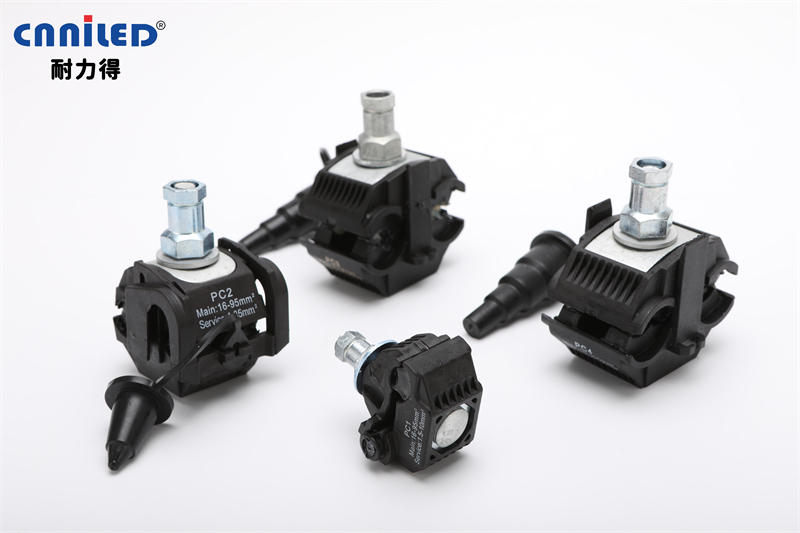
| PC1 | 16–95 mm² | 1.5–10 mm² | 9 Nm |
| PC3 | 25–95 mm² | 25–95 mm² | 18 Nm |
| PC4 | 50–150 mm² | 50–150 mm² | 18 Nm |
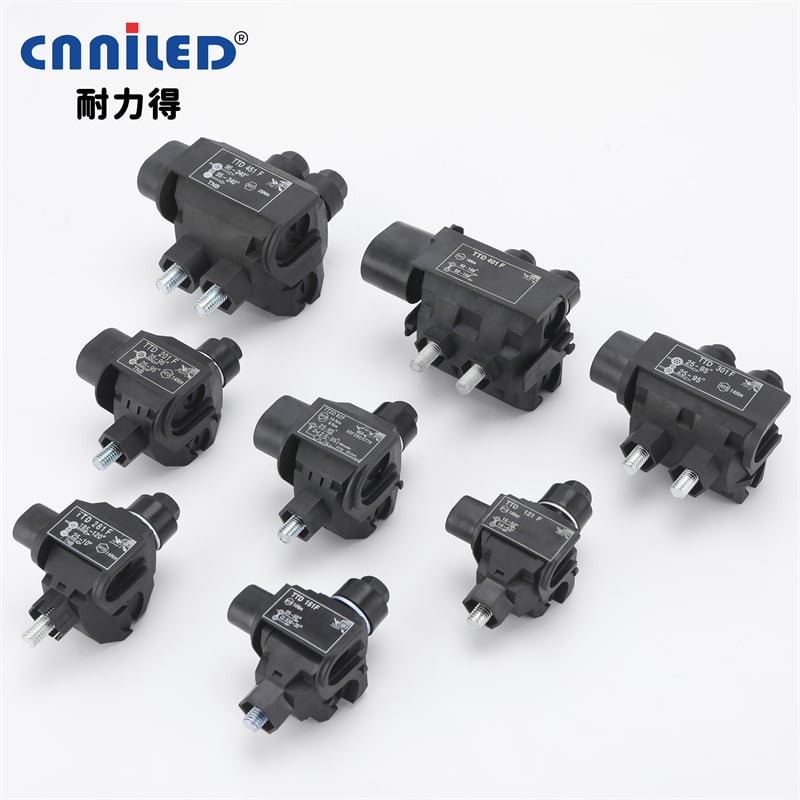
| TTD151F | 16–95 mm² | (2.5) 6–35 mm² | 12 Nm |
The IPC3.1 and IPC3.2 models are listed in CNNILED's IPC Series.
IPC3.1 supports a main conductor range of 16–95 mm² and a branch conductor range of 10–25 mm².
IPC3.2 supports main and branch conductor ranges of 70–95 mm².
Both models list a tightening torque of 12 Nm.
View CNNILED IPC3.1 and IPC3.2
CNNILED's PC Series includes models with different conductor compatibility ranges.
PC1 supports a smaller branch conductor range of 1.5–10 mm², while PC3 and PC4 support larger conductor combinations.
The published tightening torque also differs between models: PC1 lists 9 Nm, while PC3 and PC4 list 18 Nm.
The CNNILED TTD151F piercing clamp lists a main conductor range of 16–95 mm² and a branch conductor specification of (2.5) 6–35 mm².
Its published tightening torque is 12 Nm.
Buyers should confirm the meaning of the parenthetical conductor size with CNNILED before specifying this model for a project.
Electrical distribution networks may use aluminum or copper conductors.
Different conductor materials have different mechanical and electrical characteristics, making material compatibility an important selection factor.
CNNILED's published specifications for the models compared above list aluminum and copper under tooth material.
However, the material of the piercing contacts does not by itself establish compatibility with every aluminum or copper conductor combination.
Before selecting a connector, buyers should confirm the approved conductor materials and configurations for the specific model.
Correct tightening is important for achieving the intended electrical contact and mechanical connection.
Different IPC models may require different tightening torques.
For example, CNNILED's published specifications list:
PC1: 9 Nm
IPC3.1 and IPC3.2: 12 Nm
TTD151F: 12 Nm
PC3 and PC4: 18 Nm
These differences illustrate why installers should not apply a single torque value to every insulation piercing connector.
Installation should be performed by qualified electrical personnel following the manufacturer's instructions and applicable electrical safety procedures.
Where a connector uses a shear-head mechanism, the installation procedure should follow the model-specific instructions.
A connector should not be reused unless the manufacturer explicitly permits it.
Overhead electrical distribution equipment may be exposed to changing environmental conditions.
These include:
Rain and moisture
Temperature variations
Ultraviolet radiation
Dust and airborne contaminants
Mechanical vibration
Corrosive environments
An IPC selected for outdoor use should have appropriate environmental protection for the intended application.
Buyers should review the manufacturer's product documentation for relevant environmental testing, sealing performance, and operating limitations.
A published test condition should not be confused with an operating voltage rating or a guarantee of suitability for every environment.
Always verify both main and branch conductor sizes. A connector must match the specified ranges.
Confirm whether the selected model is suitable for the intended conductor materials.
Different models have different installation requirements. Follow the specific product instructions.
Outdoor applications require appropriate protection against the expected operating environment.
Procurement decisions should consider product specifications, technical documentation, installation requirements, and supplier support.
Before purchasing insulation piercing connectors, procurement teams should request relevant technical information.
Important questions include:
What main and branch conductor ranges does the model support?
Which conductor materials are approved?
What are the rated electrical operating conditions?
What tightening torque or installation procedure is required?
What environmental performance information is available?
Can the supplier provide technical drawings and relevant test documentation?
What are the minimum order quantities and available purchasing options?
Clear technical documentation helps engineers and buyers compare products more effectively.
Choose an IPC based on main and branch conductor sizes, approved conductor materials, electrical ratings, environmental conditions, and installation requirements. Always verify the individual model specifications.
According to CNNILED's published specifications, IPC3.1 supports a 16–95 mm² main conductor and a 10–25 mm² branch conductor. IPC3.2 supports 70–95 mm² for both main and branch conductors. Both list a tightening torque of 12 Nm.
The tightening torque depends on the model. CNNILED lists 9 Nm for PC1, 12 Nm for IPC3.1, IPC3.2 and TTD151F, and 18 Nm for PC3 and PC4. Always follow the current product instructions.
Certain IPC designs are intended for outdoor electrical distribution applications. Suitability depends on the model's documented environmental performance and the operating conditions.
No. Each IPC model has specified main and branch conductor compatibility ranges. Selecting a connector outside those ranges may compromise the intended connection performance.
Choosing the right insulation piercing connector requires careful consideration of conductor dimensions, material compatibility, installation torque, electrical requirements, and environmental conditions.
CNNILED offers different insulation piercing connector models with published specifications for various conductor combinations.
For utility engineers, electrical contractors, distributors, and procurement managers, comparing model-specific technical data is an important step toward selecting suitable electrical fittings.
Explore CNNILED's insulation piercing connector range and contact our team for product specifications and purchasing information.
Visit CNNILED Official Website
 Hot News
2026-11-03
2026-10-13
2026-10-12
2025-08-12
2025-08-06
Copyright © Zhejiang Nailide Power Technology Co.,Ltd. All Rights Reserved - Privacy Policy
 EN