
Home > News > Selection Guides
How to Choose the Right Bolted Type Strain Clamp for Overhead Lines
Selecting a bolted type strain clamp starts with the conductor and the mechanical duty of the line. Confirm the conductor construction and diameter, the required tension load, the clamp’s approved application, and the installation instructions before comparing prices or choosing a model. For overhead distribution projects, the right clamp must hold the specified conductor under the intended service conditions without damaging it. This guide explains the selection process and illustrates three CNNILED product groups: NLL, 3D183-2P, and 5D93 6D.
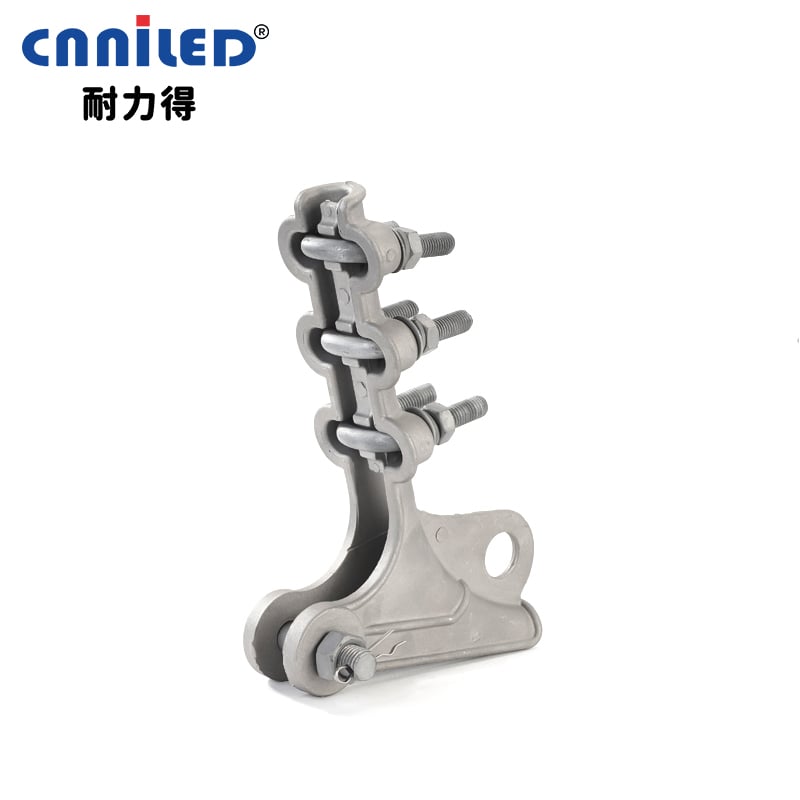
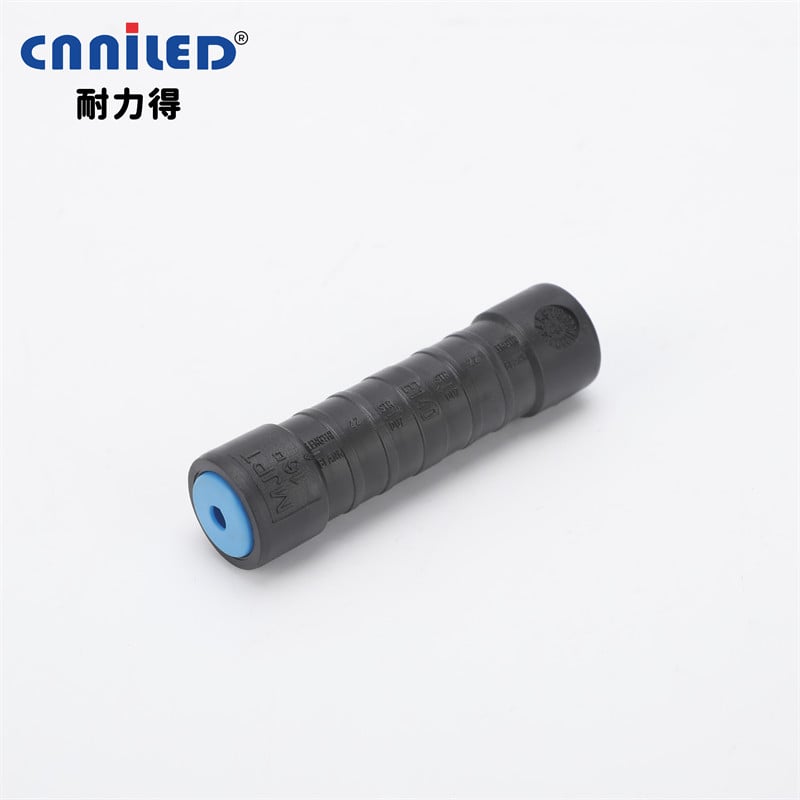
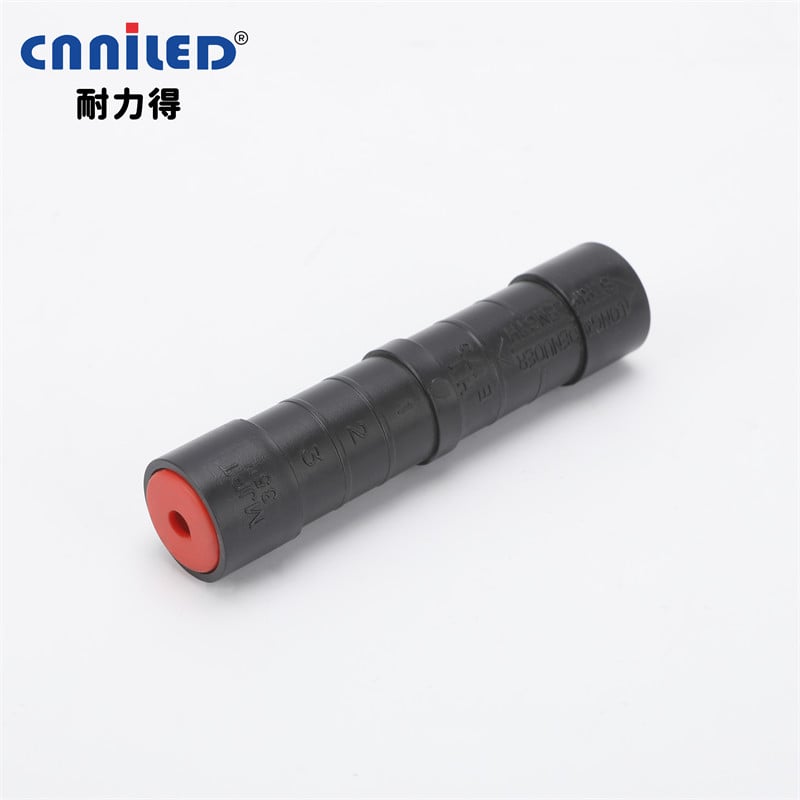
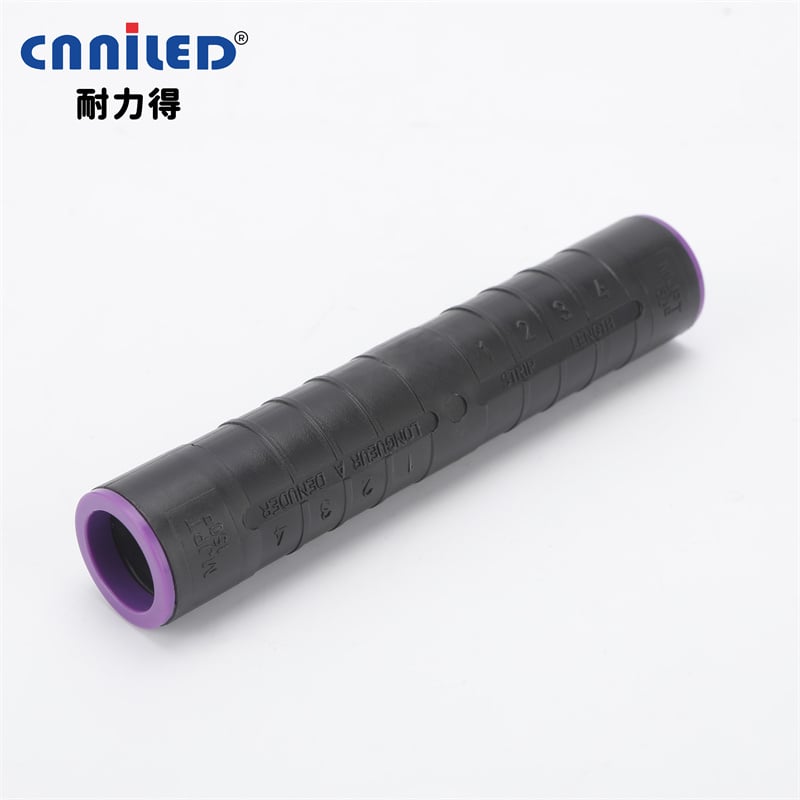
CNNILED NLL series — assembled bolted strain clamp (original company photo).
A bolted type strain clamp is a mechanical fitting designed to grip a conductor and transfer tensile force to a supporting structure through an attachment point. It is commonly considered for dead-end positions, angle structures, and other locations where the conductor must be restrained according to the line design. Its clamp body and bolts secure the conductor, while the attachment assembly connects to the insulator string or supporting hardware. Exact suitability depends on the clamp design and the conductor specification.
A strain clamp is not simply an electrical splice. Although some designs may form part of an electrical path, its defining selection requirement is mechanical restraint. Electrical performance, where required, must be established separately from the applicable product documentation.
The conductor is positioned in the intended groove or clamping channel. Bolts and pressure elements apply controlled force to the conductor. The clamp body then transfers the line tension to the attachment fitting. A correct installation depends on the conductor sitting in the intended location, the right hardware being used, and fasteners being tightened in the manufacturer’s specified sequence and torque range. Tightening by guesswork can damage strands or leave insufficient grip.
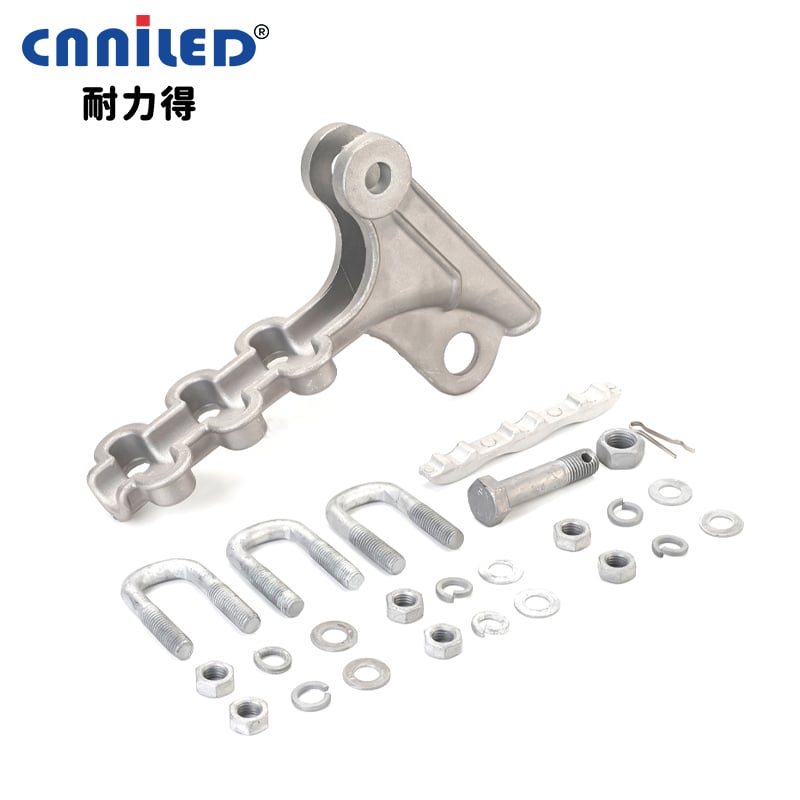
CNNILED NLL series — original disassembled product photograph showing the clamp and supplied hardware.
Start with the actual conductor designation, material, outside diameter, and construction. Cross-sectional area alone does not always determine the outside diameter, especially when comparing different conductor constructions. Ask the manufacturer to confirm compatibility with the specified conductor, not just a nominal size.
Review the design tension, conductor rated strength, span conditions, and the project’s required holding criteria. A clamp that looks similar to another model may have different load capability. Request documented test results or a technical datasheet for the exact configuration when mechanical performance is critical.
The clamp body, bolts, nuts, washers, and attachment parts should be suitable for the conductor and environment. Material combinations can affect corrosion resistance and service life. Do not infer alloy grade or coating thickness from the product’s appearance; confirm these details through technical documentation.
Check the conductor groove profile, pressure distribution, number and position of bolts, and clearance for installation. More bolts do not automatically mean a better clamp: the complete design, approved conductor range, and test evidence matter more than bolt count alone.
Confirm how the clamp connects to the insulator or structure, including the clevis or eye arrangement, pin dimensions, orientation, and required articulation. The attachment interface must match the rest of the line hardware.
Consider humidity, salt spray, industrial pollution, temperature variation, and maintenance access. Coastal or highly corrosive installations may require specific material and coating requirements. Request confirmation of corrosion protection rather than assuming a metallic finish guarantees suitability.
Before purchase, ask for the installation drawing, bolt tightening instructions, recommended tools, and inspection criteria. Confirm whether conductor preparation or protective components are required for the exact design. Installation must follow the project’s approved procedure and the manufacturer’s instructions.
Bolted strain clamps use mechanical fasteners to secure a conductor in a shaped body. Wedge-type clamps use a wedge mechanism to develop grip, while preformed dead-end grips use helically formed rods matched to a particular conductor. These designs differ in installation method, conductor compatibility, and intended application. They should not be substituted for one another solely because they perform a similar line function.
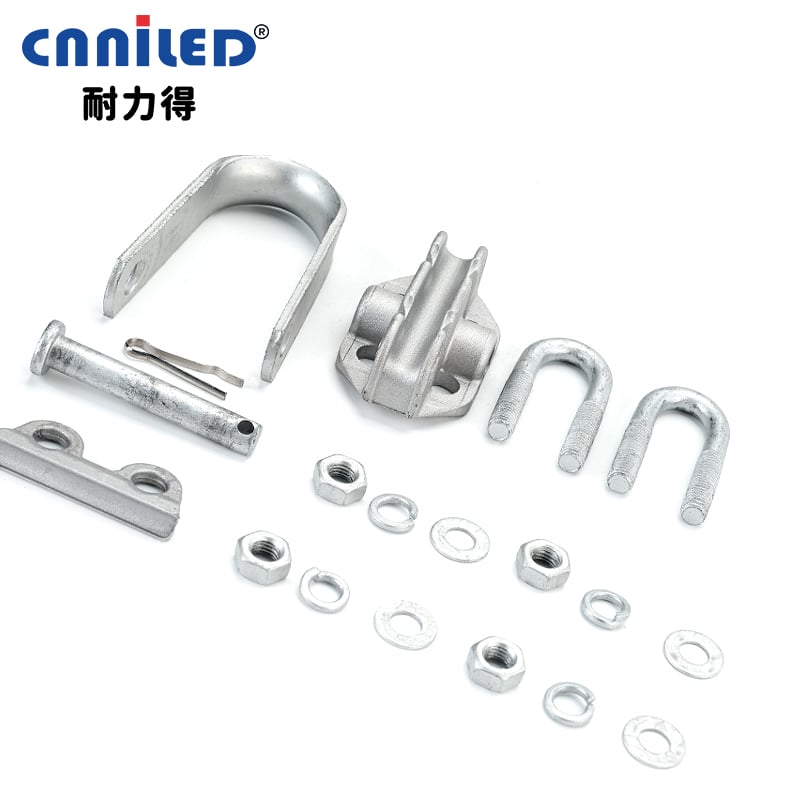
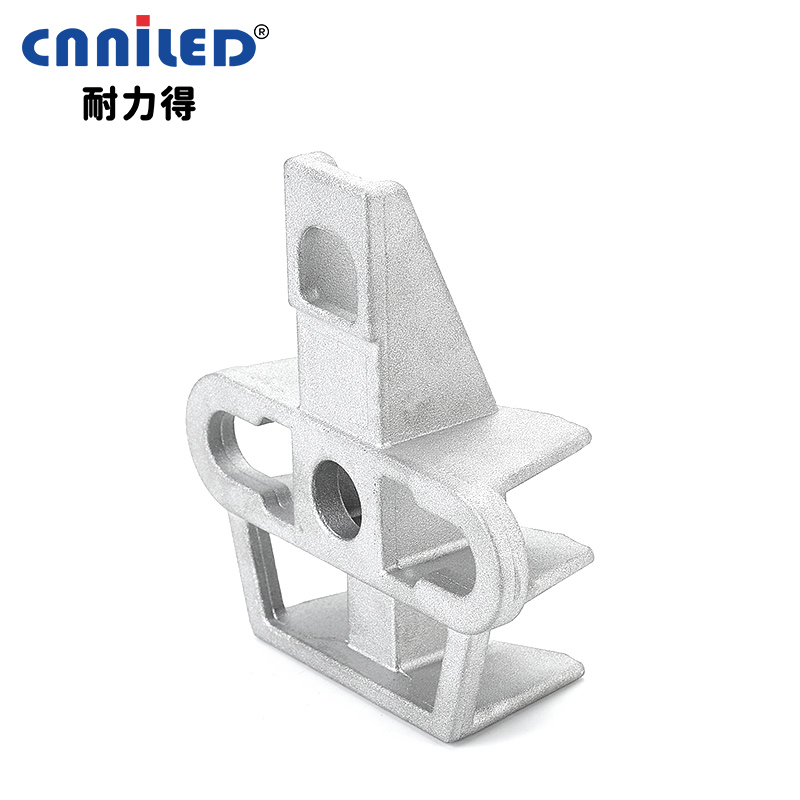
CNNILED 3D183-2P — original product photograph supplied by CNNILED.
CNNILED supplies the product groups pictured below. The images are original company-provided product photos, with their model grouping confirmed by CNNILED. The pictures help illustrate differences in body shape, bolt arrangement, and attachment construction; they are not substitutes for engineering drawings or certified performance data.
|
Product group |
What the supplied images show |
Information to confirm before ordering |
|
NLL series |
Assembled clamp, disassembled hardware, and product variants |
Exact NLL model, conductor diameter, load rating, material and torque |
|
3D183-2P |
Clamp components and U-bolt-style assemblies |
Conductor compatibility, holding load, attachment dimensions and hardware specification |
|
5D93 6D |
Several clamp configurations and assembled products |
Exact 5D93/6D designation, conductor range, mechanical data and installation method |
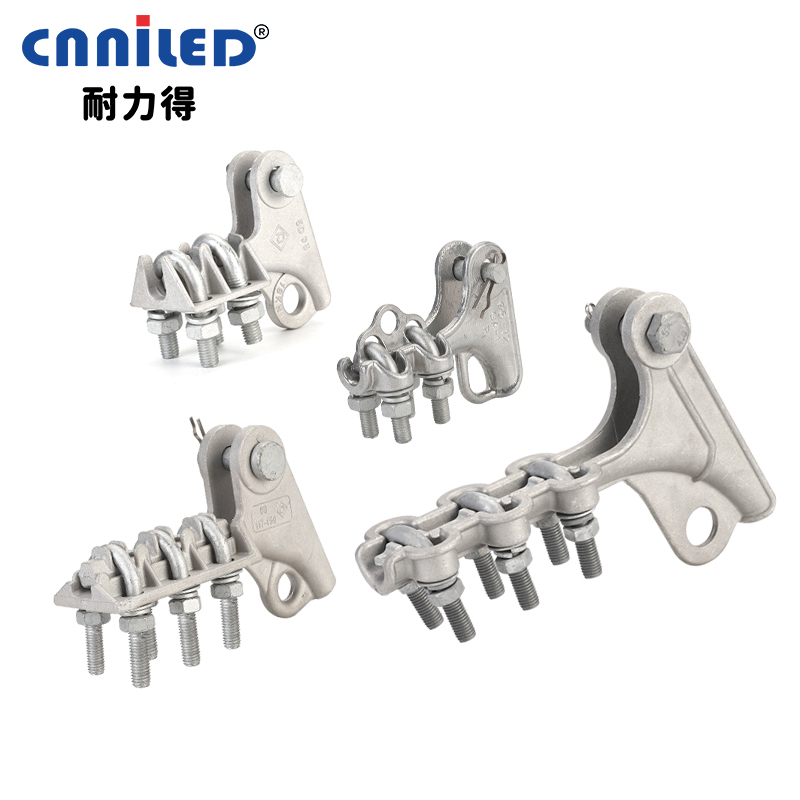
CNNILED NLL series — multiple original product views.
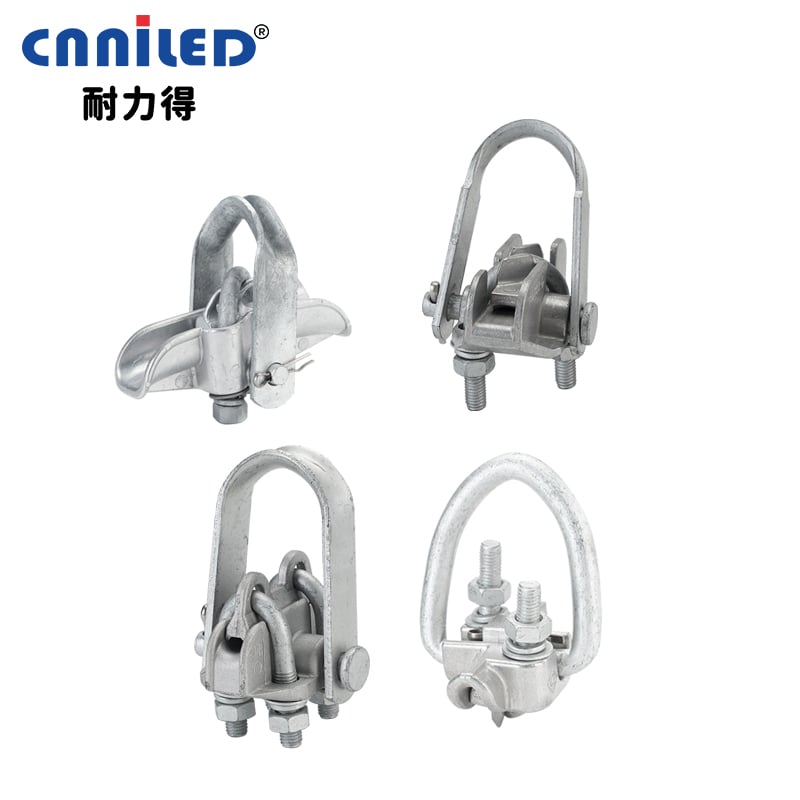
CNNILED 3D183-2P — product variants and assembly details.
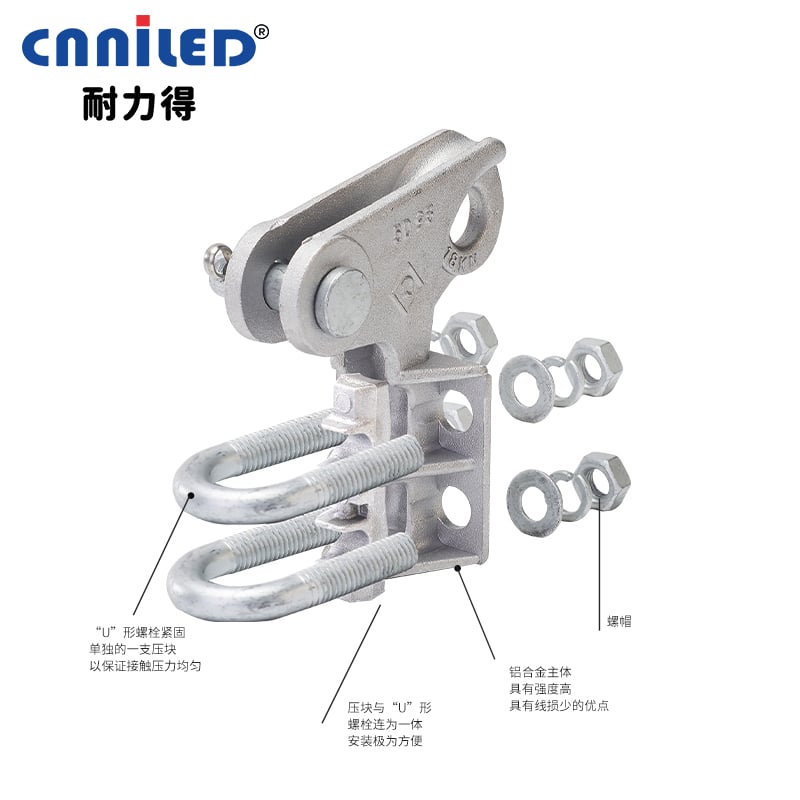
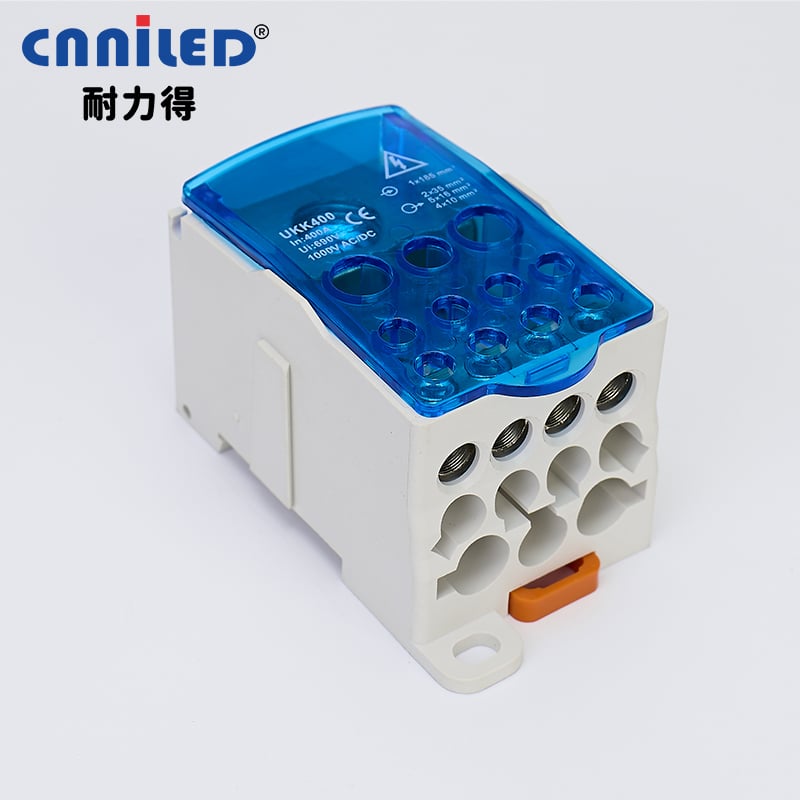
CNNILED 5D93 6D — original annotated product photo. Check the manufacturer’s technical sheet for specifications.
For a reliable model comparison, request the current datasheets for all three product groups. The supplied photographs do not establish the conductor ranges, rated strengths, material grades, or compliance status, so no numerical values are claimed here. A supplier should identify the exact model and revision in its quotation.
Choosing by appearance alone is risky. Two clamps can look nearly identical while using different conductor grooves, hardware, or load ratings. Another common mistake is selecting only by conductor cross-sectional area and overlooking outside diameter or strand construction. Buyers may also overlook the attachment interface, local corrosion conditions, and installation documentation.
For international orders, avoid relying on a generic product family name. Put the exact model, conductor specification, required mechanical performance, coating or material requirement, and applicable drawings on the purchase order. Ask the supplier to identify any proposed substitution before manufacturing.
• Conductor designation, material, outside diameter and construction
• Line location and mechanical duty, including required holding criteria
• Exact clamp model and approved conductor range
• Attachment dimensions and mating hardware
• Material, coating and environmental requirements
• Installation procedure, torque instructions and inspection method
• Applicable project specifications and required test documents
• Quantity, packaging, marking and delivery schedule
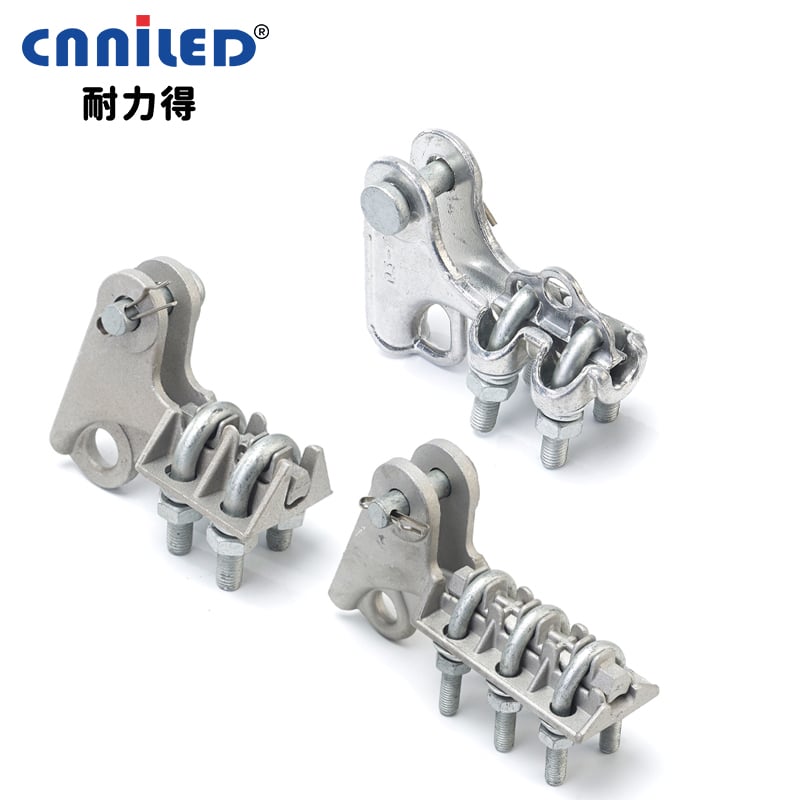
CNNILED 5D93 6D — original product family photograph.
It is a mechanical overhead-line fitting that grips a conductor using bolted pressure elements and transfers tensile force to a supporting structure. The approved application and load capability depend on the exact model and conductor.
A strain clamp is selected to resist specified conductor tension at a termination or other tension-bearing location. A suspension clamp typically supports a conductor at an intermediate structure while allowing the movement and load behavior intended by its design.
Provide the conductor designation, material, outside diameter and strand construction. Compare these against the manufacturer’s approved range for the exact model. Also verify mechanical performance and attachment dimensions.
No. Bolt count is only one design feature. Grip performance depends on groove geometry, conductor compatibility, materials, fastening method and verified testing of the complete assembly.
Some designs are intended for particular aluminum conductor types, but compatibility must be confirmed for the exact conductor and clamp model. Do not assume suitability from the clamp’s appearance or from a broad product family label.
Follow the model-specific manufacturer instructions and the project-approved work method. Confirm the correct conductor placement, fasteners, tightening sequence and specified torque. Work on electrical lines must be performed by qualified personnel using appropriate safety procedures.
Share conductor specifications, project location, required mechanical performance, attachment details, applicable standards or drawings, expected quantity, packaging requirements and delivery destination. Request a datasheet and clear model identification with the quotation.
The right bolted type strain clamp is the one whose documented conductor compatibility, mechanical performance, attachment arrangement, materials, and installation requirements match the project. CNNILED offers the NLL, 3D183-2P, and 5D93 6D product groups shown in this guide. For a project-specific recommendation, share your conductor specification and required application with the CNNILED team and request the current technical datasheet and quotation.
Visit CNNILED: https://www.cnniled.com/
SEO Title: How to Choose a Bolted Strain Clamp | CNNILED
Meta Description: Learn how to select bolted type strain clamps for overhead lines. Compare conductor fit, mechanical requirements and CNNILED product groups.
URL Slug: how-to-choose-bolted-type-strain-clamp
Category: Selection Guides
Keywords: Bolted Type Strain Clamp, Bolted Strain Clamp, Overhead Line Tension Clamp, Dead End Clamp, Strain Clamp Selection, Overhead Line Fittings, NLL Strain Clamp, CNNILED
Tags: Bolted Type Strain Clamp, Strain Clamp, Overhead Line Fittings, Selection Guide, CNNILED
Image grouping confirmed by user: photos 1–3 NLL; 4–6 3D183-2P; 7–9 5D93 6D. Exact model subvariants, conductor ranges, mechanical ratings, torque, materials and certification status have not been independently verified. Verify these against current CNNILED datasheets before adding numeric claims. Image files are embedded from the user’s original uploads. OKKI may require images to be uploaded to its media library for stable public URLs.
 Hot News
2026-11-03
2026-10-13
2026-10-12
2025-08-12
2025-08-06
Copyright © Zhejiang Nailide Power Technology Co.,Ltd. All Rights Reserved - Privacy Policy
 EN